Carcosa
The King in YellowCarcosa is the lost and dim city associated with the King in Yellow, the lake of Hali, and a cosmology that reaches beyond ordinary human geography. It first appears in the opening poem as a place whose beauty is inseparable from desolation: cloud waves break along its shore, twin suns sink beneath the lake, shadows lengthen, and the night is marked by black stars and strange moons. Throughout the narratives, Carcosa becomes the imaginative and supernatural destination toward which forbidden knowledge, delirium, and the pursuit of the soul converge.
Poetic Image and Names
Carcosa is introduced through a song addressed to a brother, and the poem establishes its defining atmosphere through recurrence and variation. The city is named first as Carcosa, then as Lost Carcosa, and finally as Dim Carcosa. Those altered names do not describe separate places; they deepen the sense that Carcosa is both a location and a condition of absence. It is visible in memory and language, yet already remote, shadowed, and inaccessible.
Its sky and waters form the central visual grammar of the place. Black stars rise while strange moons circle through the heavens; the twin suns descend into the lake of Hali; and cloud waves break against the shore. The imagery joins astronomical vastness to geographical enclosure. Carcosa is not merely beneath an unfamiliar sky: it is a world whose skies, waters, and horizons obey a dreamlike scale, making human orientation impossible while giving the setting a severe and memorable coherence.
The poem also places Carcosa within a silence that threatens to erase both art and speech. The songs of the Hyades are destined to die unheard where the tatters of the King hang, and the voice of the soul is imagined as dead before it can be heard. Carcosa therefore carries a double promise: it offers images of extraordinary musical and visual beauty, but it also absorbs voices, songs, and meanings into an immense silence.
Carcosa in The King in Yellow
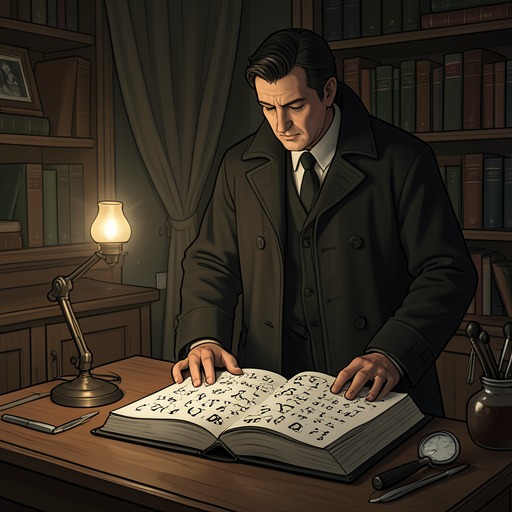
The narrator’s first sustained encounter with Carcosa comes through reading The King in Yellow during convalescence. He tries to destroy the book after finishing its first act, throwing it into the fireplace, but the volume falls open and the words of the second act draw him back. He rescues it from the coals and reads it repeatedly, responding with terror, joy, tears, laughter, and trembling. Carcosa is consequently presented as a literary place whose power crosses the boundary between representation and experience.
The narrator cannot forget Carcosa after reading the book. He remembers its black stars, the lengthening shadows of human thoughts, and the twin suns sinking into the lake of Hali; above all, he retains the memory of the Pallid Mask. His response identifies the city as the geographic center of a larger artistic and metaphysical infection. The translated copies of The King in Yellow are seized by the French Government, yet public suppression only increases curiosity in London and elsewhere. The book spreads from city to city and continent to continent, while readers acknowledge its supreme artistic force and fear that human nature cannot endure the poison concealed within its seemingly innocent language.
Carcosa thus belongs to the book inside the book as much as to the world described by the outer narrators. Its apparent distance makes it more dangerous, not less. Because it is encountered through art, it can enter ordinary rooms, private minds, and social life without requiring a physical journey. The city is an imaginative threshold: once its images have been understood, the reader can no longer treat them as harmless fiction.
Mythic Geography and Imperial History
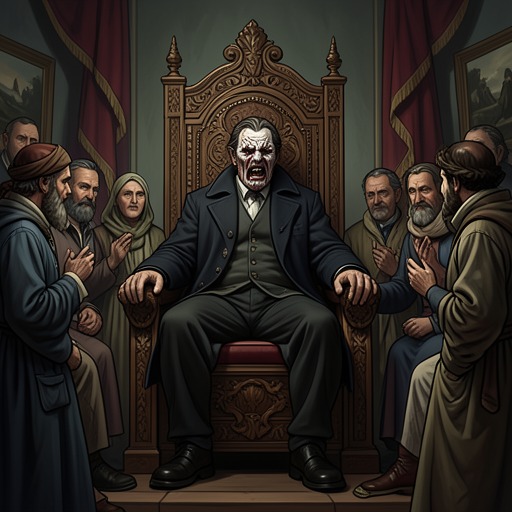
Carcosa also appears as the supposed origin of the Imperial Dynasty of America. In explaining his manuscript to Osgood Oswald Vance, Mr. Wilde traces the dynasty’s establishment in Carcosa and connects its lakes and genealogies with Hastur, Aldebaran, and the Hyades. He moves through Cassilda and Camilla, the depths of Demhe, and the lake of Hali before following the imperial family through Uoht, Thale, Naotalba, the Phantom of Truth, and Aldones, finally reaching the story of the Last King.
This genealogy makes Carcosa more than an atmosphere of supernatural dread. It becomes the alleged source of a political order and a hereditary claim to power. Mr. Wilde uses its mythology to overwhelm Vance and to give an earthly conspiracy the authority of an ancient, otherworldly history. The setting’s remoteness is politically useful: because its origins cannot be tested by ordinary experience, the narrative of descent can be imposed upon a stunned listener as revelation.
The same account links Carcosa to the King in Yellow’s tatters and to the Pallid Mask. When Mr. Wilde completes his exposition and identifies Hildred Castaigne as the cousin of the King, Carcosa’s mythic geography becomes the foundation for Hildred’s demand for the crown and for his belief that his cousin must be exiled or die. The city’s imagined past therefore produces immediate consequences in the present, converting obscure symbols into justification for dynastic violence.
Visions, Delirium, and Spiritual Space
During Alec’s illness, Carcosa rises within a fevered sequence of images that also includes white creatures heavy as stone, Boris Yvain’s basin, a wolf’s head snapping at Geneviève, the King in Yellow’s tattered mantle, Cassilda’s cry, the lake of Hali, and the towers of Carcosa behind the moon. The vision is not presented as a stable map. It is entangled with jealousy, loyalty, fear, and the narrator’s uncertain perception of his obligations to Boris Yvain and Geneviève. Yet Carcosa remains one of the fixed images amid the disorder, returning whenever the mind approaches a truth it cannot safely contain.
In the church vision, Carcosa becomes the far side of an apparent spiritual pursuit. The narrator understands the being in the church as a transformed figure from his own past who has been hunting his soul in the Court of the Dragon. As the church dissolves in dazzling light, ordinary architecture gives way to black stars, wet winds from the lake of Hali, a moon dripping with spray, and the towers of Carcosa rising behind it. The city is therefore reached not by travel but by the collapse of the familiar world.
The vision ends with the narrator sinking into darkness while the King in Yellow whispers, "It is a fearful thing to fall into the hands of the living God!" Carcosa’s role here is not simply to house a monster. It is the horizon of a judgment that exceeds ordinary religious and physical categories, a place where death, lost souls, and the limits of consciousness become visually present.
The Yellow Sign and Carcosa’s Reach
In the story of the Yellow Sign, Carcosa is present through conversation and symbolic recognition before the final attack. The narrator and Tessie Reardon discuss The King in Yellow, the King, the Pallid Mask, Hastur, Cassilda, and the mystery of the Hyades while the fog outside rolls against the windows like cloud waves breaking on the shores of Hali. Their enclosed room becomes temporarily continuous with Carcosa’s landscape, even though neither character physically enters the city.
The onyx clasp bearing the Yellow Sign makes this connection material. Tessie begs the narrator to remove it and throw it into the fire, but he cannot do so despite believing that he wishes to. His refusal turns Carcosa from a literary or conversational presence into a force attached to the body. The sign is both an object and a summons, and the narrator’s inability to discard it reveals how thoroughly the city’s mythology has entered his will.
The subsequent arrival of the black-plumed hearse transforms the domestic room into a threshold. The narrator hears the approaching wheels, bolts the door, and recognizes that no lock can keep out the creature coming for the Yellow Sign. When the figure enters, tears the clasp from his coat, and strikes him, Tessie’s spirit flees. Carcosa is never shown as a conventional destination in this episode; instead, its power arrives through the sign, the fog, the remembered symbols, and the King in Yellow’s agent. Its decisive significance lies in that permeability: the lost city remains elsewhere and yet is already inside the ordinary world.